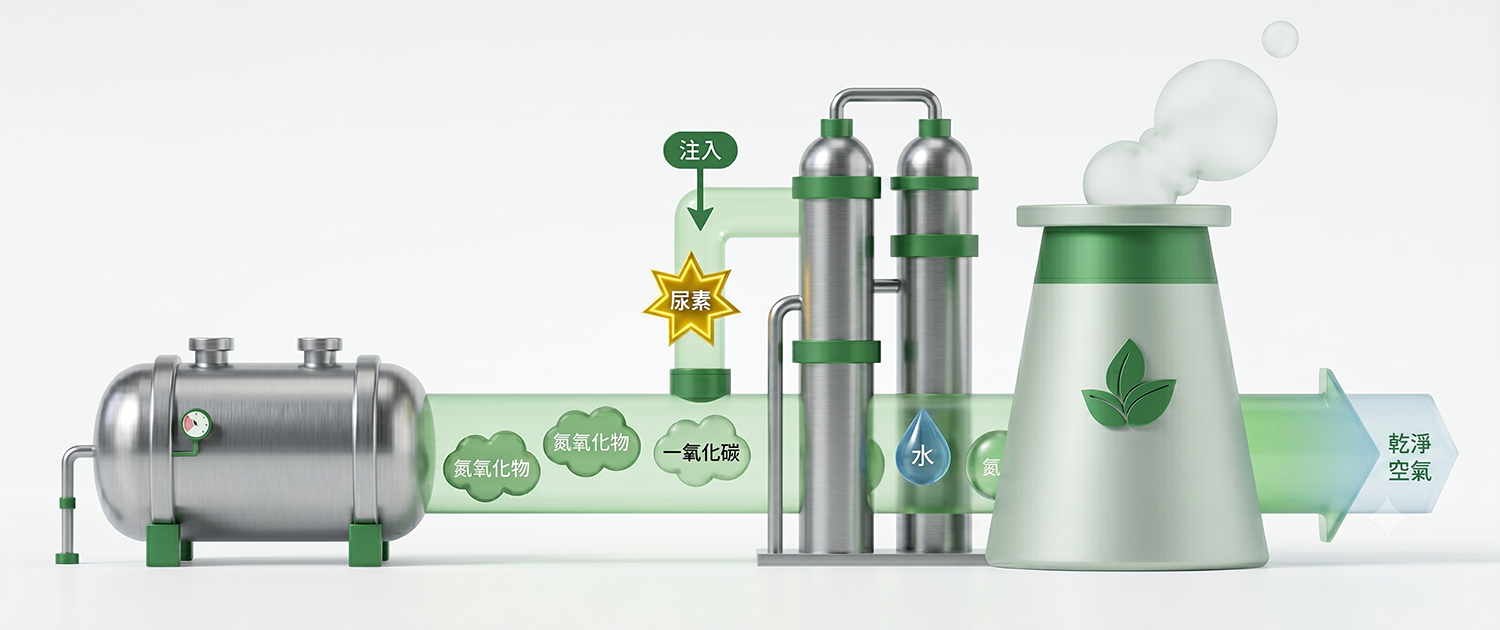

An environmentally friendly emission reduction technology for diesel engine trains (such as diesel locomotives and diesel-electric locomotives). Like cars, it is used to reduce nitrogen oxides (NOx) in diesel engine exhaust.
。
Why do trains need to add urea?
Urea is added to trains not to provide power, but to reduce air pollution emissions.
- Eliminate nitrogen oxides (NOx): Diesel engines produce large amounts of nitrogen oxides (NOx) when burning at high temperatures, which is the main source of acid rain and photochemical smog.
- Comply with environmental regulations: As environmental standards become increasingly stringent, new diesel trains must be equipped with an SCR (selective catalytic reduction) system to convert harmful gases into harmless substances by injecting urea solution.
How it works: SCR system
The SCR system (Selective Catalytic Reduction) will spray urea solution into the exhaust pipe during the train exhaust process:
- Thermal decomposition: Urea will decompose into ammonia (NH₃) when it encounters the high temperature of the exhaust gas.
- Chemical reaction: Under the action of the catalytic converter, ammonia reacts with nitrogen oxides (NOx) in the exhaust gas.
- Products: Eventually converted into environmentally friendly nitrogen (N₂) and water vapor (H₂O) and discharged out of the vehicle.
⚠️ Precautions for use and ingredients
- Ingredients Ratio: This solution typically consists of 32.5% high purity urea and 67.5% deionized water.
- Do not mix: This is an industrial-grade high-purity solution. Do not use agricultural fertilizer grade urea to prepare it yourself, otherwise the SCR catalyst will be blocked and damaged due to impurities.
- Consumption: Urea consumption is usually proportional to fuel consumption (about 3% to 6% of diesel consumption).
- What will happen if you don’t add it? If urea is depleted and not replenished, modern train computer systems may limit engine power or force a shutdown to avoid illegal emissions.