
Event information
Best available control technology for stationary and mobile pollution sources
my country's air quality shows obvious seasonal differences. When the southwest monsoon blows in summer, fine suspended particles (PM2.5) are found in the atmosphere.The concentration can reach good quality standards, but when the northeast monsoon prevails in early winter and spring, it will obviously worsen and form a haze phenomenon. Whether long-term or short-term exposure to this environment will increase the risk of respiratory diseases and death. To solve this problem, it is unrealistic to try to change weather patterns. The key is to reduce air pollution emissions. The main sources of air pollution emissions are: "stationary pollution sources" and "mobile pollution sources". Stationary pollution sources refer to pollution sources that cannot change their location, such as thermal power plants, waste incinerators, chemical industry processes, diesel engines and other factories that use fuel for heating. Mobile pollution sources include mobile emissions from automobiles, diesel vehicles, public transportation, ships and aircraft.
(1).jpg)
Stationary pollution sources &mobile pollution sources (Image source: National Institutes of Health)
Currently, there are three main feasible control solutions for fixed pollution sources, namely: Selective Denitrification Catalyst Reduction Reactor (SCR / SNCR), electrostatic precipitator (EP), flue gas desulfurization system (FGD). Among them, the selective denitrification catalytic reduction reactor (also known as flue gas denitrification technology) is one of the best available technologies used in global air pollution control. It is recognized as the most effective method to treat "nitrogen oxides" (NOx) with high efficiency. The SCR/SNCR system has high stability and sophisticated technology. Hundreds of SCR/SNCR factories are already in operation around the world. There are more than fifty factories equipped with SCR/SNCR equipment in operation or under construction in Taiwan. The Environmental Protection Agency continues to control pollution sources and implement measures to reduce air pollution control fees, making factories equipped with SCR/SNCR more valuable. (For mobile pollution source solutions, please see Novax’s website www.novax-material.com.tw)
.jpg)
SCR / SNCRSelective denitration catalytic reduction reaction equipment (Also known as: flue gas denitrification technology)
SCR / SNCRGenerally, ammonia (NH3) is usedAs a reducing agent, it reacts with nitrogen oxides in exhaust gas to produce harmless nitrogen (N2) and water (H2O). Currently, there are three most commonly used reducing agents for SCR/SNCR: Anhydrous Ammonia, Ammonia Water and Urea. Since liquid ammonia and ammonia water are toxic chemicals according to industrial safety regulations, they are hazardous to combustion, explosion and corrosion, and pose a high risk to operators and the surrounding environment. Urea is a non-toxic and harmless chemical with no possibility of explosion and no danger at all. Therefore, several advanced countries in the world have gradually replaced liquid ammonia and ammonia water with urea as the reducing agent for SCR/SNCR.
Urea is SCR/SNCRThe consumption cost of the largest consumable in the equipment directly affects the overall benefit evaluation of the denitration system (De-NOx). The highly reactive urea solution is sprayed into the denitrification reaction zone through the ammonia injection nozzle pipeline, so that it is fully mixed with the flue gas, and reacts with the NOx in the flue gas at 350-800°C to achieve the purpose of removing NOx and reduce the impact on air quality.
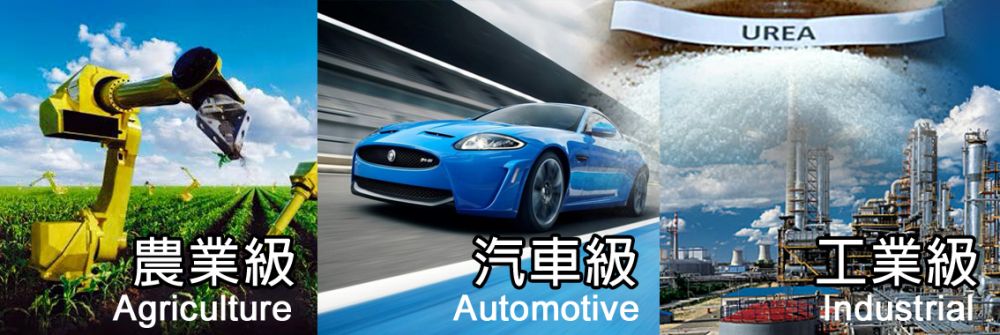
Nova supplies different grades of urea products
Novavax is the global catalyst reducer (AdBlue®)One of the main suppliers, it also provides urea and urea solution products for SCR/SNCR equipment such as thermal power generation, waste incinerators, chemical industry processes, and diesel engines. Various grades of urea products are available from agricultural grade, automotive grade to industrial grade. In addition to having sufficient production capacity to serve customers around the world and meet the market demand for "stationary pollution sources" and "mobile pollution sources", Nova is constantly committed to improving environmental quality and hopes to set a new example for Taiwan's green enterprises.
Urea related product sales and consulting services, please call us: 0800-200-669