
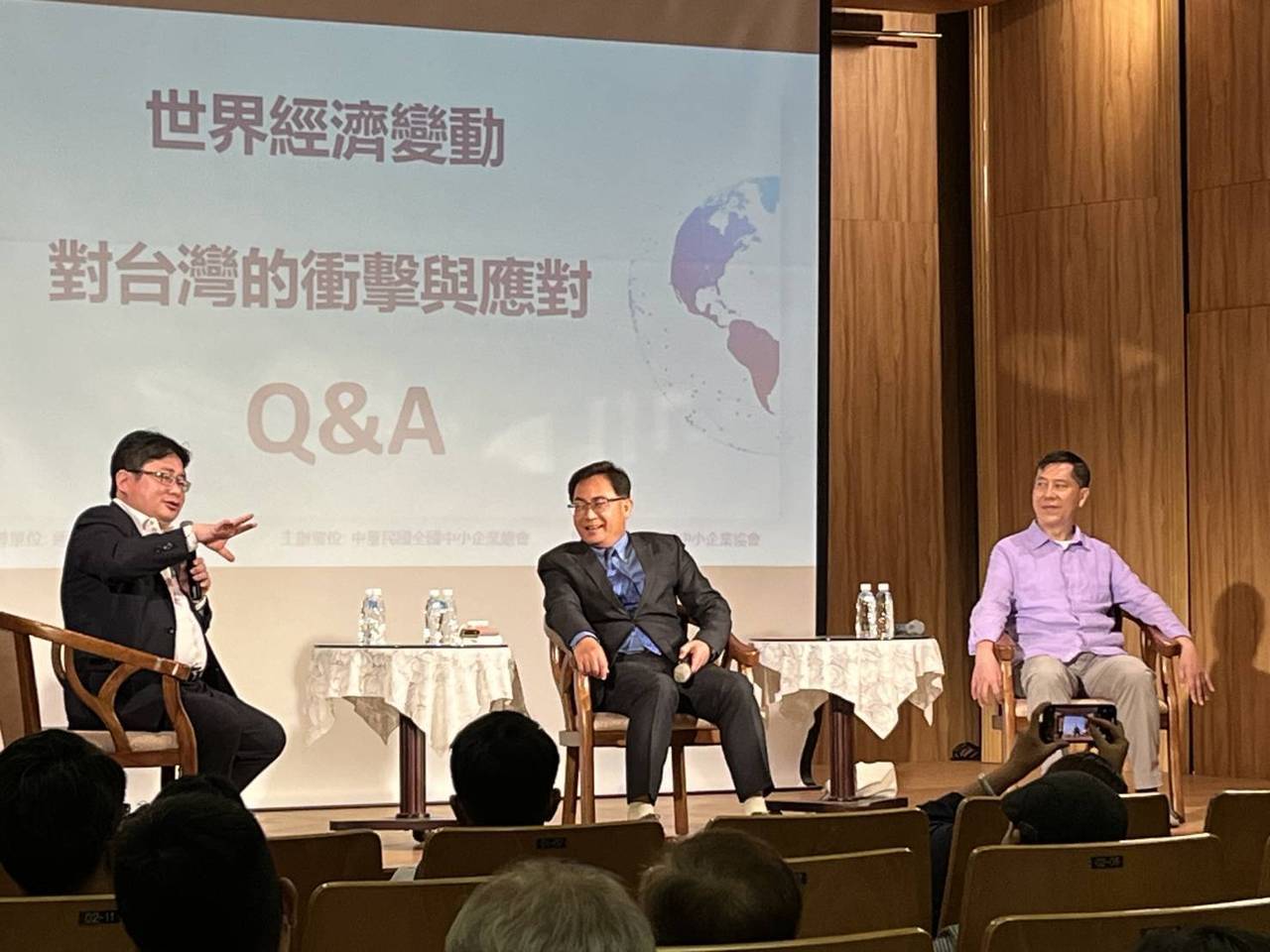
In view of the changes in global economic and trade trends and changes in international relations, the impact of any fluctuations on Taiwan at all levels is an important issue. The Taoyuan City Small and Medium Enterprises Association recently held a forward-looking lecture "The Impact and Response of World Economic Changes on Taiwan", attracting more than 100 entrepreneurs to attend and listen, to jointly care about Taiwan's future prospects and continue to work hard.
The distinguished guests invited for this speech were Akio Yaita, Director of the Taipei Branch of the Sankei Shimbun, and two lecturers, Wang Hao, a well-known freelance writer, shared the changes and trends of the world economy. Finally, Yang Lianzhi, Chairman of the Taoyuan City Small and Medium Enterprises Association, hosted a three-way question and answer session with the two lecturers and all participants, and the response was very enthusiastic.
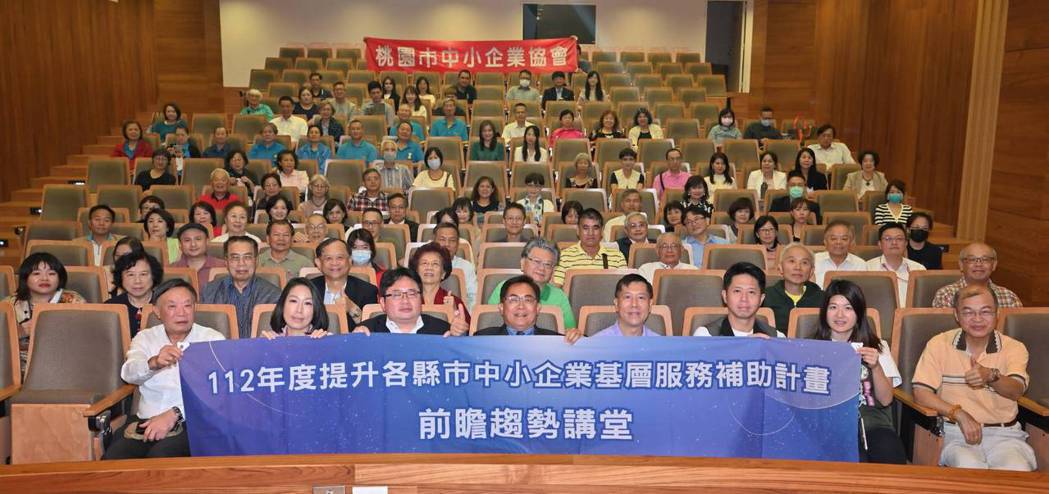
Yang Lianzhi, chairman of the Taoyuan City Small and Medium Enterprises Association and chairman and general manager of Nova Materials Technology Co., Ltd., has been actively organizing lectures and activities since serving as the chairman of the association. He hopes to bring various small and medium-sized enterprise operators or interested friends to share common concerns on various topics, such as the international economy and the future direction of Taiwan, sharing of experience of successful business owners, health lecture topics, etc., while allowing members to communicate and create business opportunities together. He holds the concept of being based in Taiwan and looking at the world, learning and moving forward with everyone.
Yang Lianzhi said that the planned forward-looking lecture "The Impact and Response of World Economic Changes on Taiwan" is a very important topic. He suggested that the Taiwan government can adopt a higher international perspective and create a more overall efficiency in the development of Taiwan's important public construction and planning issues to meet the needs of the people and enterprises.
One of the speakers, Akio Yaita, is a Japanese journalist born in Mainland China and holds a PhD in philosophy from the Chinese Academy of Social Sciences. He has long been conducting in-depth research and observation of the economy of China and the world, holds erudite, objective and sharp analysis, and has professional foresight on Taiwan's economy and politics. He believes that the international order in 2022 has been disrupted. Looking back at the four major events that occurred in 2022, the Russia-Ukraine war, Abe's assassination, Pelosi's visit to Taiwan, and the information revealed at the 20th National Congress of the Communist Party of China, were all unpredictable. In addition, the recent Israeli-Palestinian conflict has deep-level significance. Global politics and economy have undergone great changes, but the crisis is also a turning point, and perhaps a new pattern. How to stand up for business opportunities and look internationally at this time, business owners need to use different thinking to face the market.
The second speaker, Dr. Wang Hao, is a well-known freelance writer. He studied law at Peking University and a PhD in international relations at the University of Oxford in the UK. He has a thorough understanding of international economic trends and analysis, and he also used actual figures to diagnose the importance of Taiwan.
Since China's economy has experienced rapid consumption and development in the past 45 years, China's additional RMB issuance in 2022 will be 28 trillion yuan, but its GDP will only be 18 trillion U.S. dollars. The figures show that China's currency circulation velocity is low, which has led to problems such as land financialization, government finance landization, and real estate bubbles. Although the government has strengthened supervision, debt has hit a new high, real estate sales have slowed, cash flow risks have been exposed, and many developers have gone bankrupt. Judging from economic figures, China's current situation is the effect of a vicious cycle.
But for Taiwan, due to the New Southbound Policy, last year's exports to ASEAN reached a record high, and exports to the United States were also an 18-year high. However, the first long-term structural dilemma of Taiwan's economy is insufficient domestic investment and excessive foreign investment. The second long-term structural dilemma is that the ratio of government fiscal revenue to GDP is too low, and less than 15% of expenditures are used for economic development. This shows that the proportion of government expenditures is too small and the speed of infrastructure construction is slow. It is also recommended that the government learn from the public utility listing experience of other countries and find a balance between public interests, employee interests, and shareholder interests. Furthermore, the central government should also make more forward-looking plans. For example, new energy development and infrastructure projects are very necessary and in line with international trends. Coupled with the innovative energy of Taiwan's small and medium-sized enterprise owners, they will not be absent from any international development and will gain an important and unique position.