
Event information
Let AI chat with the elderly! CUHK’s industry and academia join forces to develop elderly care, using technology to connect personal emotions
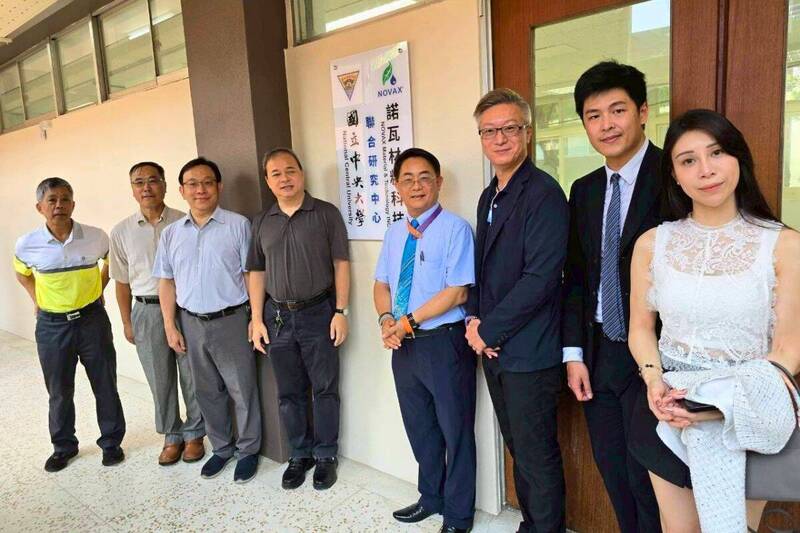
The Department of Engineering at National Central University and Nova Materials Technology have jointly established a joint R&D center to develop smart products for elderly care. (Provided by the Department of Management, Central University)
Industry-university cooperation promotes the research and development of smart products for elderly care! The Department of Engineering at National Central University and Nova Materials Technology today announced the establishment of a joint R&D center to focus on the companionship, emotional care and smart care needs of the elderly in an aging society, and jointly develop smart companion products that combine generative AI, virtual humans, smart robots and imaging neurophysiological sensing technology. We will use the research energy of academia and the practical experience of the industry to jointly create elderly care solutions that combine technological innovation and social value.
The school pointed out that the research will use large-scale language models as the intellectual core of virtual humans and robots, and use text, photos, videos, personal life stories and other data to create digital companions with personalized memory and long-term interaction capabilities. The system can gradually understand the elderly's life experience, interpersonal relationships, values and daily habits, provide a more natural and personal companionship dialogue, and build a trusting relationship through continuous interaction to help improve the elderly's psychological support and quality of life.
In addition, the joint R&D center will also introduce imaging neurophysiological sensing technology, combined with emotion recognition and behavior analysis mechanisms, to instantly grasp the user's emotional changes and physical and mental status, further improving the interactive quality and care effectiveness of the smart companion system. Through the integration of generative AI, emotion perception and life memory modeling technology, virtual humans or robots are not only tools to respond to questions, but also become familiar and trustworthy intelligent partners for the elderly in long-term interactions.
Ye Shiqing, a professor at the Department of Engineering at National Central University, said that in the face of the challenges brought about by an aging society such as living alone, loneliness, and insufficient care workers, the development of artificial intelligence technology should not only focus on improving efficiency, but also focus on the emotional connection between people. This time, we established a joint R&D center with Nova Technology, hoping to create smart companion solutions that combine technological prowess and practical application value through cross-field cooperation.
Yang Lianzhi, chairman of Nova Materials Technology, said that in the future, he will actively deepen industry-university cooperation and technology transfer with the Department of Engineering of National Central University, continue to invest resources, jointly apply for health and medical technology-related research projects, and invest manpower and funds to promote product development, market verification and application promotion. Through the cooperation between industry and academia, both parties hope to accelerate the implementation and commercialization process of innovative technologies, create internationally competitive smart companion products for the elderly, and create greater development momentum for the smart care industry.
Sun Minde, director of the Department of Engineering at National Central University, hopes that the establishment of the joint R&D center will demonstrate the determination of academia and industry to work together to promote artificial intelligence innovation, respond to the important needs of an aging society through the power of science and technology, create new opportunities for the development of Taiwan's smart care industry, and create an innovative model with both commercialization potential and social influence.
Source:free daily